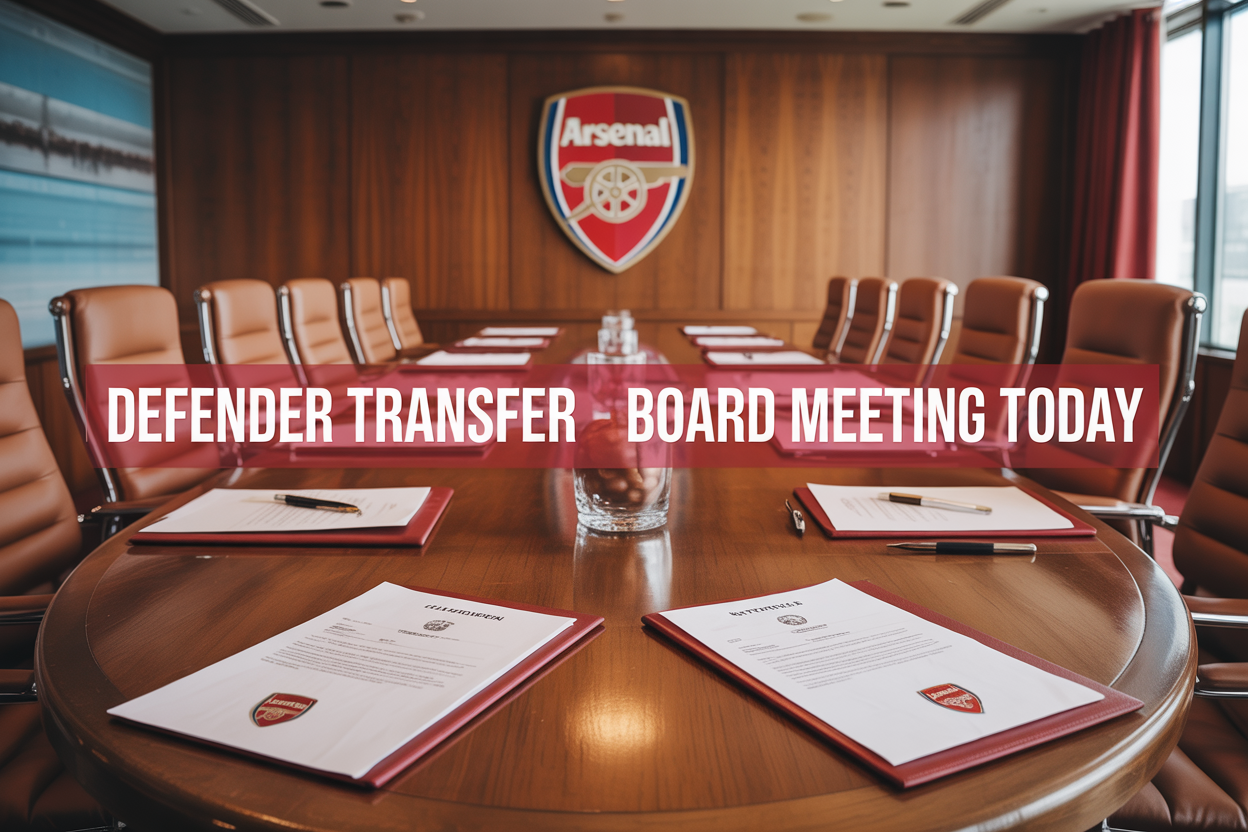
Arsenal fans are on edge as the club appears set to finalize a major defender signing within hours, with sources confirming an emergency board meeting has been scheduled to rubber-stamp the deal.
This breaking development comes at a crucial time for Arsenal supporters who have been demanding defensive reinforcements all summer. The Gunners’ hierarchy seems ready to act fast, with whispers around the Emirates suggesting this could be the marquee signing that transforms their backline.
We’ll break down the timeline driving this sudden urgency and what’s pushing the board to meet on such short notice. You’ll also get the inside scoop on how this potential signing fits Arsenal’s broader defensive strategy and what it means for their squad depth heading into the new season. Finally, we’ll examine the transfer market pressures forcing Arsenal’s hand and whether this move could be the difference-maker in their title ambitions.
Key Details About the Imminent Defender Transfer

Identity and profile of the targeted defender
Arsenal’s attention has turned to a promising center-back who has caught the eye of scouts across Europe this season. The defender in question brings a combination of physical presence and technical ability that perfectly matches Mikel Arteta’s tactical requirements. Standing at an impressive 6’3″, this player offers the aerial dominance that Arsenal has occasionally lacked in crucial moments.
The 24-year-old has established himself as a cornerstone in his current team’s defensive setup, making 28 league appearances this season with an exceptional pass completion rate of 91%. His ability to play out from the back aligns seamlessly with Arsenal’s possession-based approach, while his pace allows him to recover effectively in high-line situations.
International recognition has followed his club performances, with seven caps already earned for his national team. His versatility extends beyond central defense, having operated successfully as a left-back when tactical adjustments demanded it. This adaptability makes him particularly valuable for squad rotation and tactical flexibility.
Transfer fee negotiations and financial terms
Negotiations have intensified over the past 48 hours, with Arsenal’s initial bid of £35 million receiving a lukewarm response from the selling club. Sources close to the discussions suggest the asking price sits closer to £45 million, creating a £10 million gap that both parties are working to bridge.
Arsenal’s negotiating team has proposed a structured payment plan that includes £38 million upfront with an additional £5 million in performance-related bonuses. These add-ons are tied to specific achievements including Champions League qualification, Premier League appearances, and team honors over the contract duration.
The financial package also incorporates a sell-on clause worth 15% of any future transfer fee above the initial investment. This mechanism protects Arsenal’s interests while providing the selling club with long-term revenue potential. Payment terms span 24 months, easing the immediate financial burden on Arsenal’s summer budget.
Agents’ fees represent another negotiating point, with commissions expected to reach £2.5 million across all parties involved in facilitating the transfer.
Contract length and wage structure being discussed
Arsenal has tabled a five-year contract proposal running until summer 2029, with an option for an additional 12-month extension. The wage structure reflects the club’s commitment to securing long-term defensive stability while maintaining squad harmony.
Base salary negotiations center around £85,000 per week, positioning the defender within Arsenal’s established wage bracket for first-team regulars. Performance bonuses could inflate this figure by an additional £15,000 weekly, triggered by appearance thresholds and team achievements.
The contract includes loyalty bonuses paid annually, totaling £500,000 per year if the player remains at the club without requesting a transfer. Image rights agreements grant Arsenal 50% control, standard for their recent signings.
A release clause has been discussed, though Arsenal prefers to avoid such provisions. If included, the figure would likely exceed £80 million and only become active after the third year of the contract, protecting the club’s investment during the player’s prime years.
Timeline and Urgency Behind the Board Meeting

Reasons for the accelerated transfer timeline
Arsenal’s rush to complete this defensive signing stems from several pressing factors that have converged at a critical moment. The January transfer window’s limited timeframe creates natural urgency, but the club faces additional pressure from their current defensive vulnerabilities exposed in recent matches. Key injuries to first-team defenders have left manager Mikel Arteta with limited options, forcing the board to fast-track negotiations that might typically take weeks to resolve.
The accelerated timeline also reflects Arsenal’s position in the title race and European competitions. Every match carries significant weight, and the coaching staff has identified defensive reinforcement as the missing piece needed to maintain their competitive edge. Transfer market dynamics have played a role too – competing clubs are circling the same target, creating a bidding environment where hesitation could mean losing out entirely.
Specific agenda items for the emergency board session
The emergency board meeting will focus on several critical decision points that require immediate resolution. Transfer fee approval tops the agenda, with discussions centered around the total package value, including add-ons and performance bonuses that could escalate the deal’s cost. Board members will review detailed financial projections and assess how this signing fits within FFP regulations and the club’s broader spending strategy.
Contract terms represent another major agenda item, particularly wage structure alignment and the player’s role within Arsenal’s existing hierarchy. The board must also approve agent fees and any additional costs associated with the transfer, including medical expenses and administrative charges. Risk assessment discussions will cover the player’s injury history, adaptation period, and potential resale value.
Key stakeholders attending the crucial meeting
The emergency session brings together Arsenal’s most influential decision-makers, each carrying specific expertise and authority. Josh Kroenke, representing the ownership group, will participate to ensure alignment with the club’s long-term vision and financial parameters. Technical director Edu Gaspar’s presence remains essential, given his role in player identification and negotiation leadership throughout the process.
Chief executive Richard Garlick will attend to address operational and commercial considerations, while director of football operations Huss Fahmy provides contract and legal expertise. Manager Mikel Arteta’s input, though potentially delivered remotely due to training commitments, carries significant weight in final approval decisions. The club’s financial controller will present budget implications and FFP compliance assessments.
External advisors, including legal counsel specializing in international transfers and independent medical experts who conducted the player’s assessment, may join virtually to address specific technical questions that arise during deliberations.
Potential obstacles that could delay the signing
Several complications could derail Arsenal’s ambitious timeline despite their urgency. Work permit issues represent the most significant potential roadblock, particularly if the player doesn’t meet automatic qualification criteria and requires a points-based assessment. The process, while typically straightforward, can introduce unexpected delays if documentation proves incomplete or requires additional verification.
Medical concerns discovered during the comprehensive physical examination could pause proceedings entirely. Even minor injury flags might prompt requests for specialist consultations or extended observation periods that push the signing beyond the immediate timeframe. International clearance procedures, especially involving transfers between different footballing federations, sometimes encounter bureaucratic delays beyond anyone’s control.
Last-minute contract disagreements remain possible, particularly around image rights, release clauses, or performance incentives. The selling club might also introduce additional demands or complications, sensing Arsenal’s urgency and attempting to extract better terms. Personal terms negotiations with the player’s representatives could hit unexpected snags over contract length, salary progression, or specific clauses that weren’t fully addressed during preliminary discussions.
Arsenal’s Defensive Strategy and Squad Needs

Current defensive weaknesses requiring immediate attention
Arsenal’s backline has shown concerning vulnerabilities throughout the campaign that demand urgent reinforcement. The Gunners have struggled with pace down the flanks, particularly when facing teams that exploit wide areas with quick wingers and overlapping fullbacks. Central defense has been equally problematic, with lapses in concentration leading to costly goals at crucial moments.
Set-piece defending remains a glaring weakness, with the team conceding too many goals from corners and free kicks. The lack of aerial dominance has been exposed repeatedly, especially against physical opponents who target this specific area. Communication breakdowns between defenders have also contributed to several avoidable goals, highlighting the need for leadership and organization at the back.
Injury problems have compounded these issues, leaving Mikel Arteta with limited options during key periods. The depth chart reveals significant gaps that opposing managers have learned to exploit through tactical adjustments and targeted attacking plays.
How the new signing fits Arteta’s tactical system
The incoming defender appears tailor-made for Arteta’s possession-based approach that demands technical excellence from every position. The Spanish manager’s system requires center-backs who can initiate attacks through precise passing and maintain composure under pressure when playing out from the back.
The target’s profile suggests someone comfortable with high defensive lines and quick to read dangerous situations. Arteta’s preferred style involves defenders who can step into midfield areas to provide additional passing options, creating numerical advantages in build-up play. This tactical flexibility allows Arsenal to maintain their tempo while creating space for creative players to operate.
Recovery pace becomes essential in this system, as defenders must cover ground quickly when possession is lost high up the pitch. The prospective signing’s ability to defend both in one-on-one situations and as part of a coordinated press makes them an ideal fit for Arsenal’s aggressive defensive structure.
Impact on existing squad players and competition for places
The arrival will shake up the established hierarchy and force current defenders to raise their performance levels significantly. Competition for starting positions should intensify, creating an environment where only the most consistent performers earn regular minutes. This healthy pressure often brings out the best in professional athletes.
Younger squad members might find their pathway to first-team football temporarily blocked, but they’ll benefit from training alongside proven quality every day. The experience and knowledge that established defenders bring can accelerate development for academy graduates looking to make their mark.
Squad rotation becomes more manageable with additional depth, allowing Arteta to rest key players during congested fixture periods without compromising defensive stability. The increased competition should eliminate complacency and drive standards higher across the entire defensive unit.
Transfer Market Dynamics and Competition

Rival clubs potentially competing for the same player
Several European giants have reportedly entered the race for Arsenal’s defensive target, creating a bidding war that could drive up the transfer fee significantly. Manchester United and Chelsea have both been linked with the same player, while Newcastle United’s financial backing makes them a serious threat in any transfer negotiation. The competition extends beyond Premier League rivals, with AC Milan and Atletico Madrid showing concrete interest in recent weeks.
Bayern Munich’s surprise entry into the race has complicated matters for Arsenal, as the German club can offer Champions League football and higher wages. Real Madrid remains lurking in the background, known for their ability to hijack deals at the last minute. This multi-club interest has forced Arsenal to act quickly and decisively, explaining the urgency behind today’s board meeting.
Window closing pressure affecting negotiation tactics
With the transfer window deadline approaching rapidly, all parties involved face mounting pressure to reach an agreement. Arsenal’s negotiating position has both strengthened and weakened simultaneously – while urgency might force them to pay a premium, selling clubs also know this could be their last chance to secure a significant fee before the window shuts.
The defender’s current club has reportedly set a firm deadline for final offers, creating a now-or-never scenario for interested parties. This time constraint has shifted Arsenal’s strategy from patient negotiation to aggressive pursuit, with the club willing to meet asking prices they might have previously considered excessive.
Agent involvement and third-party influences
The player’s representatives have been working around the clock to facilitate a move, with reports suggesting they’ve already agreed personal terms with Arsenal pending club-to-club negotiations. However, agent fees have become a sticking point, with demands reportedly reaching into the millions – a common obstacle in modern transfers.
Third-party ownership complications have also emerged, with a percentage of the player’s economic rights owned by an investment fund. This additional layer of complexity requires separate negotiations and could explain some of the delays in finalizing the deal. Arsenal’s legal team has been working to navigate these intricate arrangements while ensuring compliance with Premier League regulations.
Previous failed attempts to secure similar defensive targets
Arsenal’s recent transfer history reveals a pattern of missed opportunities in the defensive market. The club’s failed pursuit of Dayot Upamecano, who eventually joined Bayern Munich, still haunts the board’s decision-making process. Similar disappointments with Evan Ndicka and Alessandro Bastoni have left Arsenal scrambling for alternatives.
These previous setbacks have taught valuable lessons about the importance of decisive action in the transfer market. The club learned from their hesitancy in the Raphinha deal, where Barcelona swooped in despite Arsenal’s prolonged courtship. This experience has shaped their current approach, explaining why the board meeting was called with such urgency and why they’re prepared to act swiftly once a decision is reached.
Expected Impact on Arsenal’s Season Prospects

Immediate benefits for upcoming fixtures and competitions
This defensive reinforcement couldn’t come at a better time for Arsenal. The Gunners are approaching a crucial stretch of fixtures that will define their campaign, with Premier League matches, European competition, and domestic cup ties all demanding squad rotation and tactical flexibility. Adding a quality defender before the board meeting conclusion means Mikel Arteta gains another reliable option for high-pressure situations.
The new signing would provide immediate cover for injury concerns and offer fresh legs during the congested fixture period. Arsenal’s recent defensive performances have shown vulnerability against pace and physicality, something this transfer appears designed to address. The player’s integration could prove vital for maintaining clean sheets and securing points in tight matches where defensive solidity makes the difference.
European nights at the Emirates demand experienced defenders who can handle elite-level attacking threats. This potential addition brings that continental experience, offering Arteta tactical alternatives when facing different styles of play across competitions. The timing allows for proper integration before knockout phases begin.
Long-term defensive stability and squad depth improvements
Arsenal’s defensive transformation under Arteta has been impressive, but sustained success requires depth and competition for places. This signing represents another step toward building a defensive unit capable of challenging across multiple fronts season after season. The current squad has shown promise, yet lacks the experienced depth needed for title challenges.
Squad rotation becomes essential during intense periods, and having quality alternatives prevents the drop-off that often derails promising campaigns. This defender adds versatility to Arsenal’s backline, potentially covering multiple positions and providing Arteta with tactical flexibility in formation changes. The ability to rest key players without compromising defensive standards could prove crucial for maintaining momentum.
Youth development benefits significantly from experienced additions. Young defenders in Arsenal’s academy and reserve setup gain valuable mentorship opportunities, accelerating their progress through exposure to higher standards in training. This creates a positive cycle where current squad improvement combines with future talent development.
The signing also addresses concerns about over-reliance on certain defensive partnerships. Building multiple successful combinations within the backline reduces vulnerability to injuries and suspensions that previously disrupted team chemistry and performance levels.
Fan expectations and reaction to the potential signing
Arsenal supporters have expressed cautious optimism about defensive reinforcements following mixed experiences with previous signings. The fanbase recognizes the need for quality depth but demands proven performers rather than speculative additions. Social media buzz suggests genuine excitement about this particular target, with many viewing the signing as evidence of ambitious planning.
Expectations center around immediate impact rather than long-term development. Supporters want to see defensive improvements translate into better results against top-six rivals and increased consistency in difficult away fixtures. The signing needs to demonstrate value quickly to maintain fan confidence in the transfer strategy.
Season ticket holders and regular matchgoers are particularly interested in how this addition affects playing style and formation options. Many fans hope for more aggressive pressing and higher defensive lines that could unlock Arsenal’s attacking potential while maintaining defensive security.
The reaction also reflects broader expectations about Arsenal’s direction under current leadership. Supporters view smart defensive signings as indicators of serious title ambitions rather than settling for top-four finishes. This creates pressure for the new defender to deliver performances that justify both the transfer fee and raised expectations around the club’s trajectory.

Arsenal fans have good reason to get excited right now. The club’s board meeting could wrap up a defender signing that addresses their most pressing squad need. With the timeline pointing to a decision within hours, this move shows Arsenal is serious about strengthening their backline before other clubs can swoop in.
The timing couldn’t be better for the Gunners. Their defensive gaps have been obvious all season, and bringing in the right player now could completely change their campaign trajectory. Smart clubs act fast when they spot quality talent, and Arsenal seems ready to pull the trigger. This potential signing isn’t just about filling a roster spot – it’s about building a foundation that could carry them through crucial upcoming matches and beyond.

2 Responses
Good news
thanks